(VIDEOS) VIOLENCE VERSUS EMANCIPATION
ANTICIPATORY FLASHES
PART ONE
By Franz J. T. Lee
ANTICIPATORY FLASHES
PART ONE
By Franz J. T. Lee

By applying dialectical logic and by even venturing beyond its internal, systemic, universal limits, Franz tries to explain that Violence and Peace are just two different sides of the very same historical process. This Janus-faced, democratic-fascist monstrosity has to be annihilated in its total capitalist, imperialist, corporate quintessence, to be transcended by creative, creating emancipation, by natural-social humanity. The opposite, the negation of Violence is not Peace. As Marx explained it already a century and a half ago in his article 'The Jewish Question', the 'superation' of both social processes, which determine and perpetuate themselves, is Human Emancipation. Below we are publishing the first part of a series of Franz's videos on this urgent topic and enlightening excerpts from previous publications which definitely will blaze the trail to understand the current globalized terror and terrorist globalization.
***
Introduction A
http://www.4shared.com/video/ufB2flCT/EMANCIPATION_PART_1A.html
Introduction B
http://www.4shared.com/video/MKSS-vPB/EMANCIPATION_PART_1B.html
Introduction C
http://www.4shared.com/video/YjMLxM3H/EMANCIPATION_PART_1C_.html
pandemonium documents
Terrorism & Violence
Terrorism & Violence
No. 756

 Friends, exactly two decades ago, I made a contribution to a book, that was used by African university students in Nigeria. At that time, in 1983/4, all over Africa we were discussing the apartheid terror, fascist terrorism and nazi violence in the African context, as they were practized by European and American imperialism in Algeria, Angola, Mozambique, Guinea-Bissau, Namibia, Zimbabwe
 and especially in South Africa.
For the sake of historic reference, I made no changes to the original text, which indicates my degree of political reflection at that time, but also to reach students who today still may have a similar degree of historic consciousness. Of course, the topic has lost nothing of its originality and actuality, especially not with reference to terrorism and violence in their current globalized forms. Thus, enjoy this unique writing. It is of emancipatory significance for the Bolivarian Revolution in Venezuela and Latin America.
Franz.
30/07/03.
http://www.franz-lee.org/files/pandemonium00756.html
30/07/03.
http://www.franz-lee.org/files/pandemonium00756.html
Leon Trotsky: Violence, Revolution and Emancipation in South Africa
By Prof. Dr. Franz J. T. Lee
Professor in Marxism and African Studies
University of The Andes, Mérida, Venezuela.
Contribution to the Book:
Violence in the African Imagination
edited by
Department of Foreign Languages & Literatures
University of Port Harcourt, Nigeria.
1984.
THE CONCEPT VIOLENCE
Everywhere we encounter „violence“. It seems to be a universal process which threatens the very destiny of mankind. Everybody is talking about „violence“ and „peace“, as if the two form a unity and contradiction of opposites. But, very few people seem to know what this concept precisely connotes. In fact, there are just about as many definitions of „violence“ as there are persons experiencing violence daily.
In various discussions we condemn „political violence“, „social violence”, „state violence“, „class violence“, etc. However, what is violence in essence? Is it really the opposite of „peace“, and what is „peace“?
TROTSKY AND VIOLENCE IN SOUTH AFRICA
On April 30, 1933, Leon Trotsky, one of the most famous leaders of the historic October Revolution, wrote a letter to the „Workers’ Party of South Africa“ (WPSA), concerning „The National and Agrarian Struggles in South Africa“. 1) While discussing the „national question“ and the possibility of the „Blacks“, establishing a „separate State“ after a victorious political revolution, he emphatically stressed: „ … let them make this admission freely, on the basis of their own experience, and not forced by the sjambok (whip) of the White oppressors“. 2) It is of great interest what Trotsky had contrasted here, the sjambok of the White oppressors, and, admission freely, on the basis of experience, práxis-theory. Trotsky, being a revolutionary scientific socialist, and having experienced Stalin's political terror and violence, knows very well that in South Africa, in the historic process of the class struggle, an inexorable dialectical battle was taking place between the forces of „violence“ and those of „freedom“. This was the unity and contradiction of opposites, the motor of history, and today this confrontation continues with greater „force“ and velocity.
Now, what is the praxical-theoretical background of the above contention? Firstly, we have to understand the philosophic basis on which Trotsky made his scientific analysis, his approach and method. Without these, it is impossible to grasp such a concept as „violence“ in its processual manifestations.
According to Scientific Socialism or Marxism, and, for our purposes, the two are synonymous, the concrete philosophical basis of dialectical materialism (incidentally, a concept which Marx never used in his works) is eternal, living matter. Like the concept „mode of production“, the term „matter“ is an abstract-logical universal category. Because matter permanently changes, as expressed in its various forms and content, essence and appearance, probabilities, potentialities, latencies and tendencies, etc., 3) because it is in eternal flux, it is impossible for the human mind, for thinking and theory, to grasp its true reality. Hence, in discussing a concept like „violence“, which is part of the process of the evolution of matter, we can only hope to approximate with increasing precision the essence and reality of this phenomenon. What it was a million years ago, what it is today, and what it will be tomorrow, all are different, and even the subject analysing „violence“ permanently changes.
The method of dialectical materialism is the dialectical method, based on the science of movement, of evolution, of change, dialectics. 4) Concerning the elusiveness and immutability of matter, of reality, Goethe remarked: „Theory, my friends, is gray, but green is the eternal tree of life.“ Thus, materialist dialectics is the logic of motion, of universal change manifesting itself on the levels of nature, history and human thought. 5) On December 15, 1939, Trotsky, criticizing Burnham and Shachtman, pointed out: „dialectical thinking gives to concepts, by means of closer approximations, corrections, concretizations, a richness of content and flexibility; I would even say a succulence which to a certain extent brings them close to living phenomena. ... We call our dialectic, materialist, since its roots are neither in heaven nor in the depths of our ‘free will’ , but in objective reality, in nature.“ 6) And, some of the laws of the dialectics, discovered by Hegel, and applied to materialism by Marx and Engels, he enumerated as follows: „Hegel in his logic established a series of laws: change of quantity into quality, development through contradictions, conflict of content and form, interruption of continuity (discontinuity), change of possibility into inevitability, etc., which are just as important for theoretical thought as in the simple syllogism for more elementary tasks.“ 7)
Like any other science, which studies a particular kind of motion, dialectics has its laws and categories, and, even they are not absolute or eternal. Among these categories are those who will interest us specifically: essence-appearance, absolute-relative, abstract-concrete, form-content, theory-praxis. They express the dialectical compound of the contradiction and unity of opposites, which we find in every object, subject, phenomenon or process.
DIALECTICS AND VIOLENCE
Now, let us look at the features of the dialectical method, which Engels had described in Ludwig Feuerbach as „our best working tool and our sharpest weapon“. In this respect, we have also to look very closely at the oscillation between thought and reality, the abstract and the concrete, essence and appearance, theory and praxis. Ernest Mandel, in his major work, Late Capitalism, gave an excellent synthesis of the dialectical method used by Marx and Trotsky. 8) Violence as a phenomenon has a cause (or causes) and an effect (or effects), it has an essence and various appearances, it has specific contents and can appear in various forms in history and in social life.
Man has developed science, precisely because appearance and essence are never identical. Marx, in Capital, stated: „All science would be superfluous if the outward appearance and the essence of things directly coincided.“ 9) Violence as it appears on the signs „Whites Only“, as the demarcation SOWETO, is not necessarily identical with the essence of violence of the apartheid system. Violence, like everything else, in essence has a historical and material character. It enters the world, history, under specific material conditions, it develops into and through various forms, and, in a Hegelian dialectical sense, eventually „meets its doom“. What is more significant, a thing never comes-into-being alone, it always is born with its opposite. The unity and contradiction of these two phenomena is the material for scientific investigation. Worse even, everything has in its own essence already the unity and contradiction of opposites. Novack wrote: „The essence of a thing never comes into existence by itself and as itself alone. It always manifests itself along with and by means of its own opposite. This opposite is what we designate by the logical term appearance.“ 10) Hence, the essence of violence is what is necessary for its appearance in the world, in history, in South Africa, in the „African imagination“. It is the totality of qualities without which violence cannot be born, and, if they disappear, violence necessarily and „rationally“ will perish. And when a thing changes its essence, it changes essentially.
Logically, it is necessary to attempt to comprehend how violence had historically, as essence, entered African reality, and how its appearance forms throughout history had been reflected in the African „imagination“, in African philosophy. Such a work would however dialectically surpass the formal limits of this brief essay. Hence, I will just sketch the essential points of relevance.
Trotsky, as revolutionary Marxist, in various works, in which he had analysed manifold social phenomena, especially the October Revolution, had always pointed out that in the development, the process of a thing, at the beginning its essence is almost wholly submerged in a particular appearance. Generally, people, using Aristotle’s formal logic, the mother who had died when the child Dialectics was born, tend to identify forever the two as an indivisible whole. Gradually a thing „sloughs off“ its original form, in a sense of how Anaximander had explained the development of the apeiron, and assumes new appearance forms. In the case of South Africa, Trotsky in his „Letter“ very carefully distinguished between „appearance“ of South Africa to the world, and to the „Whites“, as „Dominion“, and, its „essence“, a „slave colony“, as the „Blacks“ daily experienced it in 1933.
In the course of development, in its material movement, the essence and appearance of a thing, a phenomenon, for example, violence, commingle at the peak, in the South African case, in the apartheid system at the end of the 20th century, and then gradually Hegel’s „doom“ sets in. Currently, apartheid having unfolded historically its content of social discrimination, political oppression, economic exploitation and human degradation, slowly is moving toward something else, under the pressure of the forces of emancipation, its negation, that is, its essence is fading away. Similarly, violence in South Africa, which is an intrinsic part of this process, more and more is losing its essence, and permanently changes its appearance forms. Eventually, apartheid and violence will become less essential and finally nonessential.
VIOLENCE AND REVOLUTION
How the above would be accomplished historically, Trotsky explained very clearly in his „Letter“: „A victorious revolution is unthinkable without the awakening of the Native masses; in its turn it will give them what they are so lacking today, confidence in their strength, a heightened personal consciousness, a cultural growth.“ 11)
Although Trotsky, like Marx, Engels and Lenin, appropriated great significance to revolutionary theory within the realm of political praxis - “without revolutionary theory, no social revolution“ (Lenin) - nonetheless, we have no „treatise“ on Marxist political theory, no „cook-book“ for the dialectics, no „recipe“ of how to make social revolution, and no „constitution“ which fixes the laws of motion of matter. Trotsky knew that the South African revolutionaries had to begin with the concrete realities of their daily lives and in the scientific investigation and analysis of these conditions had to move to the abstract, to a heightened political consciousness, to a „confidence in their strength“. And, by applying this „revolutionary theory“, gained from this practical revolutionary experience, again to the changing reality of South Africa, the emancipatory struggle will be elevated to a higher dialectical plane, ready to be analysed again in a concrete-abstract fashion. The above indicates how the categories „concrete-abstract“ and „theory-praxis“ are applied in a social revolutionary process. Earlier we had demonstrated how revolutionaries have to differentiate between „appearance“ and „essence“, and how these dialectical categories go hand-in-hand.
Concerning the above, Mandel remarked: „To reduce Marx’s method to a ‘progression of the abstract to the concrete’, however, is to ignore its full richness. In the first place, this misunderstanding overlooks the fact that, for Marx, the concrete was both the ‘real starting point’ and the final goal of knowledge, which he saw as an active and practical process; the ‘reproduction of the concrete in the course of thought’. Secondly it forgets that a progression from the abstract to the concrete is necessarily preceded, as Lenin put it, by a progression from the concrete to the abstract. For the abstract itself is already the result of a previous work of analysis, which has sought to separate the concrete into ‘its determinant relations’” 12)
The above is an excellent example of how the dialectical categories „cause-effect“ and „analysis-synthesis“ operate. Obviously the analysis of violence in South Africa by the masses and its revolutionary vanguard, as „abstract“ result, as „theory“, will only be true if it will be successful in reproducing the „unity of the diverse elements present in the concrete“, the police terror, personal harassment, torture, murder, genocide by social order. It is well-known that the master dialectician, Hegel, considered that only „the whole is true“. And, in our case, the „whole“ is the unity of the concrete and the abstract, that is the unity of opposites, which contradict each other. In the South African context, concerning our topic, the „whole“ is the unity of apartheid violence and African emancipation, and, the contradiction of the two.
Applying the abstract again to the concrete is theory-praxis, another important category of the dialectics, quintessential for social revolution. Mandel continues: „Fourthly, the successful reproduction of the concrete totality only becomes conclusive by application in practice. This means, among other things, that - as Lenin expressly emphasized - each stage of the analysis must be subject to ‘control either by facts, or by practice ‘”. 13)
The experience of violence by the South African masses daily is a concrete manifestation, they feel violence because it is a concentration of many determinations of apartheid society, the unity of the diverse elements which make up their human tragedy. Trotsky tried to contribute in an abstract-concrete manner to enable them to be “liberated from slavish dependence“. 14) And, although he gave examples from his own revolutionary experience, especially of the October Revolution, yet he did not consider that the African masses should „reproduce“ the Russian experience at the „Cape of Storms“. He stressed that he was „too insufficiently acquainted with the conditions in South Africa“, and that the Black masses should make admissions „freely, on the basis of their own experience“.
It is precisely in the field of „experience“, of daily political práxis, where the concrete workers of South Africa learn the dialectics, the laws and categories of the logic of motion. It is when their „heightened personal consciousness“ (Trotsky) becomes social consciousness, when their abstract reflections approximate concrete reality, only then, they can find their way through the labyrinth of South African apartheid ideology, falsifications, rationalizations and lies. It is when they begin to grasp concrete totality, Hegel’s „whole“, only then, they are approaching Truth, and nothing is more magnetic than Truth to an oppressed creature searching for emancipation, and not Messianic salvation.
Although Trotsky is using the category „race“, in a sense that it was used in his epoch, nevertheless his views were scientific and not „racist“, he did not „exclude, of course either full equality for Whites or brotherly relations between the two races“. 15) But, he was utterly against the „devil of chauvinism“ (Trotsky) and stressed revolutionary principles in the South African struggle: “... the worst crime on the part of the revolutionaries would be to give the smallest concessions to the privileges and prejudices of the Whites. Whoever gives his little finger to the devil of chauvinism is lost.“ 16) The point is: these „privileges and prejudices“ have to be abolished, and not be interpreted in different ways. As I have already pointed out in 1982 in “Political Science in Africa”, in South Africa, „our aim can only be a dialectical unity of scientific práxis and philosophic theory. Anything else will land on the garbage heap of history.“ 17)
MARXISM AND VIOLENCE
Now, let us look more closer at the Marxist conception of „violence“, especially from Trotsky's cosmovision. In commemoration of all the brave sons and daughters who had fallen in the South African struggle across the last 400 years, it is pertinent here to relate Trotsky's own personal experience of political violence, the murder of his beloved son, Leon Sedov. Leon Sedov, son of Natalia Sedova and Trotsky, was murdered in a Paris hospital by agents of Stalin's GPU. In Mexico, two years before he himself would be murdered by Stalin's secret international police, on February 20, 1938, Trotsky wrote the article: Leon Sedov - Son, Friend, Fighter. We will quote extensively to demonstrate a great revolutionary's grieve and love in the face of international violence.
„As I write these lines, with Leon Hesiod’s mother by my side, telegrams of condolence keep coming from different countries. And for us each telegram evokes the same appalling question: ‘Can it really be that our friends in France, Holland, England, the United States, Canada, South Africa, and here in Mexico accept it as definitely established that Sedov is no more?’ Each telegram in a new token of his death, but we are unable to believe it as yet. And this, not only because he was our son, truthful, devoted, loving, but above all because he had, as no one else on earth, become part of our life, entwined in all its roots, our co-thinker, our co-worker, our guard, our counsellor, our friend. .... Leon was a thoroughly clean, honest, pure human being. He could before any working-class gathering tell the story of his life - alas, so brief - day by day, as I have briefly told it here. He had nothing to be ashamed of or to hide. Moral nobility was the basic warp of his character. ... Together with our boy has died everything that still remained young within us. ... Goodbye, Leon! We bequeath your irreproachable memory to the younger generation of the workers of the world. You will rightly live in the hearts of all those who work, suffer, and struggle for a better world. Revolutionary youth of all countries! Accept from us the memory of our Leon, adopt him as your son ....“ 18)
Alas, the revolutionary youth of South Africa know today, half a century later, very little about Trotsky, about his thoughts and his work, and practically nothing about his son, their adopted brother. Violently South Africa, by means of „Suppression of Communism“ and „Terrorism“ Acts, had waged a life-and-death struggle against Marxism. But, also the Communist Party of South Africa, which had followed all the zig-zag manoeuvres of Stalin's foreign policy, and the Soviet Union itself until today, had done everything possible to blot out the very memory of Leon Trotsky and Leon Sedov. However, the Truth is the Whole, and one cannot negate one’s contradiction, without negating one’s self. Historically, as the 20th century is drawing towards a close, both Leons as revolutionary heritage of all „wretched of the earth“ are gradually penetrating even the virgin land of the African „imagination“. And all the defamations of etiquetting real revolutionaries as „Trotskyites“ or „Trotskyists“ would not stop this world process - if the true „Marxist-Leninists“ had studied their history thoroughly, by using the dialectical method, they would have known that even Lenin was a „Trotskyite“ after 1917, and that Lenin was the first one to criticize himself in the face of the eternal laws of motion of matter of everchanging history. It is not the committing of scientific errors which is the problem, it is their elevation to ossified dogma, by using the Aristotelian forms of logic, which has severely harmed emancipatory progress.
VIOLENCE AND THE FUTURE OF MANKIND
For mankind, the problem of abolishing and surpassing „violence“ began in its „cradle“, in Africa. However, before tracing the history of „violence” until South Africa of the 20th century, let us examine two important dialectical categories, „relative-absolute“ and „affirmation-negation“, which are immensely relevant in elucidating this historic process. In objective reality, in the processes of matter, „negative“ or „positive“, „absolute“ or „relative“, have no human „moral“ meaning. The process of „human history“ within the universal processes can be titulated by us as „positive“ or „negative“, but, in the last analysis, whether „human production“ as a process perishes or not, is not a matter dependent on „human will“ or desires. In fact according to Hegel, even history will meet its inevitable „doom“. Within class society, it depends on class interests how to define what is „positive“ or „negative“, thus, these categories are „relative“; absolute only is the relation of both to the universal processes. And, even then, for the dialectics, nothing is absolute, because the „absolute“ is relative to the „relative“.
Mandel explains the above as follows: „To understand motion, universal change, is also to understand the existence of an infinite number of transitory situations. ... That is why one of the fundamental characteristics of dialectics is the understanding of the relativity of things, the refusal to erect absolute barriers between categories, the attempt to find mediating forces between opposing elements. ... the relativity of categories is only partial relativity and not absolute relativity, ... in turn, it is equally necessary to make relativity relative.“ 19)
Why the „missing link“, the hybrid process between man and ape, dialectically ever came into existence, was precisely due to a unity and contradiction of opposites: Nature-Man. Man, including his most relevant feature, highly-developed consciousness, is a product, a child of natural objective processes, of the motion of matter. In the natural process, long before Man’s birth, potentially, in latency and tendency, the possibility of the evolution of man, including consciousness, was always present, is still existent, and may be existent elsewhere in the universe, even after Man has met his inevitable Hegelian „doom“, which is a dialectical synthesis to another essence and appearance, but surely not what we generally understand as „divine essence“ and „heavenly appearances“.
MAN, NATURE AND VIOLENCE
For conscious Man, who had lost himself, namely his umbilical cord to Mother Nature, Nature itself became a threat, a negation. In a most general sense, this threat to survival, to human life, was consciously comprehended as „negative“ to Man. Man felt that he was born in a violent natural surrounding. In all Man’s mythology, magical and religious beliefs, this threat of „violence“ can be traced back. But, as he was forced to labour, to use and develop tools, the principle of hope, the „positive“, the „affirmative“, emancipation also dawned into human consciousness. Thus, the unity and contradiction of violence-emancipation was established, but nothing about “violence-peace“ appeared in antiquated African imagination. Hence, Man is born in natural violence, he did not create violence, in other words, violence, in this sense, is natural, even positive to the process of human production. Without this natural violent threat human society, history could never have developed. From this point of view, „violence“ is not such an ugly word, as the „lords of the earth“ want us to make-believe. There are „mediating forces“ between the categories „violence-emancipation“, that is, they are relative to each other, emancipatory violence and violent emancipation.
In Africa, eventually the contradiction Man-Nature, gained more „essence“, and developed into Society-Nature, taking on various „appearance“ forms, and spreading its „content“ across the globe. With higher specialization, a more developed technology, division of labour, the emergence of classes, the genesis of private property of the means of production, etc., a new contradiction was created by Man directly in Society, a class contradiction, and thus, social class violence entered into the world, and into Africa. From a primary contradiction, a secondary one developed. Violence now developed into a new appearance form, class rule, ruling class violence. And, emancipation became class struggle. Class violence took on many appearance forms, religious persecution, political repression, economic exploitation, “racial“ discrimination, degradation of the woman, etc. At present class violence has reached such an intensity that once more the very existence, the essence of humanity, is threatened by total destruction, not so much by a nuclear holocaust, but by capitalism itself. The secondary contradiction has developed to an immediate primary contradiction again, and it essentially coincides with the original one: Society-Nature. The very human process of production, history is at stake.
In this context „violence“ has to be seen in South Africa; this is how Trotsky had conceived it when he supported social revolution in South Africa; and this is how it should be truly reflected in the African „imagination“. Whether the end of human history is „positive“, „affirmative“, „bad“ or „sad“ for mankind, is not the question. The problem is to comprehend our place and role within the universal process, in the motion of living matter.
VIOLENCE AND EMANCIPATION
Violence is a contradiction to Emancipation. In a certain sense, it tends to obstruct, to decelerate the motion of liberation, but motion itself is a function of totality, and it is our function, our objective too, thus, we have to be on the move to freedom. Our current problem is the Marxian dialectical leap to the „realm of necessity“, and further to the „realm of freedom“. And, in this respect, another dialectical category, “continuity-discontinuity“, a hybrid situation, gains great significance, especially in an epoch of „transition“ and transformation. „What is to be done?“ (Lenin) can be discovered in Trotsky's theory of permanent revolution, which has its genesis in Marx’s theory-praxis itself. And, concerning what has been stated above, Trotsky's theory of uneven and combined development precisely explains the problem „continuity-discontinuity“.
That violence can be eradicated in South Africa, in Africa, in the world, is a material possibility, and we know the method of how to accomplish this. The method can be found in the whole process of theory-praxis of emancipation throughout human history, and not only in the written works of Marx, Engels, Lenin, Trotsky, etc. Philosophically, already Greek philosophers like Anaximander or Heracleitus had used the dialectical method to explain the world out of itself. If we study ancient Asian, African and South American thought scientifically, we will probably discover that early Man in those regions had also done the same. In fact, the process of human production, history, could not have developed, if this method had not been applied, even though it was accidental or unconsciously. The relevance of Scientific Socialism is that we now know how to make history consciously.
As Marx had stated, capitalism, which in its essence is violence, violent exploitation, was born into the world, “.... from head to toe, with blood, flowing from all its pores“. 20) So it entered Africa and South Africa. And, so it is essentially today still. Apartheid, Nazism, Fascism are just some of its most obvious appearance forms. In its essence wages the permanent class struggle, capital versus labour. In that dialectical struggle violence and emancipation find their flowing location.
Now, for praxical purposes, the science of motion, dialectics, operates with the categories „proletariat-bourgeoisie“,“workers-capitalists“, but they are abstract-logical concepts, they have constantly to be verified on the real historical terrain. The Black mineworkers of South Africa are not identical with Marx’s concept of „proletariat“ in the Communist Manifesto of 1848. Hence, dialectics is not a dogma or a „Workers’ Bible“, it is the proletariat’s theory of knowledge, whose práxis is permanent revolution. Knowledge is an instrument to conserve homo sapiens sapiens, but, at the same time to revolutionize it. Thus, scientific knowledge is directed against all appearance forms of violence which threaten human survival. Ernest Mandel: „Knowledge is, therefore, born of the social practice of humanity; its function is to perfect this practice.” 21)
REVOLUTIONARY PRÁXIS-THEORY
This brings us to the exposition of the dialectical category: revolutionary „praxis-theory“ in general, and more specifically, in South Africa. Each thing, each movement has characteristics or peculiarities which are specific to it. Violence in South Africa has a specific „racial“ oppressive feature, which is not the case for example, in Switzerland or Venezuela. But, both can only be explained and comprehended within the framework of a larger entity, capitalist class violence. It follows, by applying the category „general-specific“, that the class struggle in South Africa will have its specific „práxis-theory“, but, it is part of the general world revolution.
Concerning the peculiarity of the South African revolution, Trotsky wrote in his „Letter“: „In so far as a victorious revolution will radically change not only the relation between the classes, but also between the races, and will assure to the Blacks that place in the State which corresponds to their numbers, in so far will the social revolution in South Africa also have a national character.“ 22)
Stressing the specificity of the South African situation, Trotsky appealed to the South African „proletarian“ party to „solve the national question by its own methods“. This is how Trotsky had operated in revolutionary praxical matters, and not with Comintern directives. But, he immediately related the specific to the generals „The historical weapon of national liberation can only be the CLASS STRUGGLE.“ 23) He gave no relevance, in a revolutionary sense, to the „race struggle“, „passive resistance“, „civil disobedience“, „non-violence“, etc. These mainly preoccupied the South African Communist Party, obeying Stalin's directives, and the „Congress“ movement of South Africa.
MARXIAN PRÁXIS-THEORY
Now, what is the Marxist conception of „práxis-theory“, which Trotsky was applying here in the South African context? Marx, in his first critique of Hegel, emphasized that „theory becomes a material force when it grips the masses“ 24), that is, when it „heightens“ their consciousness, giving them „confidence in their strength“ (Trotsky). In concrete terms, it means that the working masses of South Africa have to convert revolutionary theory, the dialectical method, into an instrument, a weapon of social revolution. How the relation práxis-theory comes into being, Marx had explained in the same essay: „It is not enough that thought should seek to realize itself; reality must also strive towards thought.“ 25) It is a dual dialectical movement, and even reality, affected and changed by praxis, can „strive“. Earlier, in another work, the otherwise very sober and awake Marx, spoke about a „dream“ to be realized „consciously“: „It will then be realized that the world has long since possessed something in the form of a dream which it need only take possession of consciously, in order to possess it in reality.“ 26)
Finally, concerning práxis-theory, Marx came to the conclusion, in the Theses on Feuerbach that it is not a matter of just interpreting the world in different ways, the point, is to change it. Trotsky had urged the South African „proletarian party“ that it „should in words and in deeds openly and boldly take the solution of the national (racial) problem in its hands.“ ( my emphasis) 27)
It is evident that. the emancipatory movement in South Africa, which is aimed against all forms of violence, necessitates the essential guide of the dialectical unity of práxis and theory. Such unity, however, cannot be realized without a real, concrete revolutionary organization. The eradication of class violence is not an individual task, it is the historic objective of South Africa's masses, as a totality, in motion.
Ever since Sharpeville, and particularly since Soweto, more than ever a true revolutionary organization is necessary in South Africa to unite the workers’ and students’ struggles. Ernest Mandel: „The function of a permanent revolutionary organization is to facilitate a reciprocal integration of student and working class struggle by their vanguards in a continuous way. There is not simply a continuum in time but also, so to speak, a continuum in space in the form of a continuity between different social groups who have the same socialist revolutionary purpose.“ 28)
In this respect, Trotsky was not blinded by „racial barriers“, already in 1933, half-a-century ago, he saw the possibility of revolutionary White students and workers joining the emancipation struggle: „The revolutionary party must put before every White worker the following alternative: either with British imperialism and with the White bourgeoisie of South Africa, or, with the Black workers and peasants against the White feudalists and slaveowners and their agents, in the ranks of the working class itself.“ 29) As we can see, this clarion call for unity was not a simple moral matter, but a principled question, based on revolutionary práxis-theory. Also, in this case, the White workers have first to develop a „heightened“ political consciousness, uniting revolutionary action and thought, because „any form of theory which is not tested through action is not adequate theory, it is useless theory from the point of view of the emancipation of mankind.“ (Mandel). 30)
The immediate objective of the South African revolution, of the workers of South Africa, is the struggle to acquire political power, State power. On February 4, 1921, when the Bolsheviks were in power, and Trotsky was making an important contribution in práxis-theory, writing on The Paris Commune, he stated: „Revolution is the open test of strength between social forces in the struggle for power“. He continued, giving a picturesque scene of how the dialectical method functions in theory-praxis, changing quantity into quality: „The popular masses revolt, set in motion by elemental vital impulses and interests, often without any conception of the paths and goals of the movement: one party writes ‘law and justice’ on its banners, another ‘order’; the ‘heroes’ of the revolution are ,guided by a consciousness of ‘duty’, or are carried away by ambition; the behaviour of the army is determined by discipline and fear, enthusiast, self-interest, routine, soaring flights of thought, superstition, self-sacrifice - thousands of feelings, ideas, moods, capabilities, passions, throw themselves into the mighty whirlpool, are seized by it, perish or rise to the surface; but the objective sense of a revolution is this - it is a struggle for State power in the name of reconstruction of antiquated social relationships.“ 31)
The above also shows the movement „concrete-abstract-concrete“, that „truth is always concrete“ (Lenin), and that „truth is the totality“ (Hegel). Classless society in Africa had produced class society; the South African revolution, as part of the totality of the African revolution, has the historic objective to produce on a higher degree again a classless society. Trotsky: „But more important, in all probability, will be the influence which a Soviet South Africa will exercise over the whole of the Black Continent.“ 32) The dialectical category „probability-inevitability“ more and more gains relevance, as the South African revolution advances. 33) But, the African revolutionaries have to be clear about what they want to negate, and whereto they want to surpass. As the dialectician Spinoza had emphasized: „Every determination is a negation“.
VIOLENCE AND CAPITALISM
It is the essence of violence in apartheid South Africa, capitalism, which emancipation is determining, negating and surpassing. Consciously this emancipatory movement, through emancipatory violence and violent emancipation, currently, is surpassing through the hybrid, transitory phase of the social revolution in South Africa. To achieve this goal the revolutionaries are using thought processes, the laws of the dialectics, as revolutionary instruments, to eliminate the various obstacles - that is why the students of Soweto exploded so violently, and why South Africa's Gestapo reacted so violently. But, goals are dialectically interconnected with means. Mandel: „Only certain means, the sum total of whose effects will actually bring us nearer to the goal, are efficient from that point of view. ... Both the capacity for fixing goals (including inventing new ones), and the constraints which imprison the choices of goals and means, characterize the dialectics of knowledge.“ 34) Trotsky was very clear about the political goal of the South African revolution: „The overthrow of British imperialism in South Africa is just as indispensable for the triumph of socialism in South Africa as it is for Great Britain itself.“ 35) In particular, it is the overthrow of imperialism in South Africa, and the achievement of socialism, but this process, in general, is directly dialectically linked with the overthrow of imperialism on a world scale, and the realization of world socialism.
CONCLUSION
In conclusion, now it becomes clear why the term „violence“ cannot be „limited“ to its „normal“ (which is generally its bourgeois, ideological) connotation, that is, only to its physical, moral and psychological meaning. It is because it is the negation, contradiction of emancipation. Emancipation gives violence its essential connotation. Also, the term “African“ is an abstract-theoretical concept, like „mode of production“, it has to be related dialectically to the emancipatory struggle, 36) to the world revolution. The „African imagination“ is „African thought“, „African philosophy“, the particular of the general, „Proletarian Thought“, „Proletarian Philosophy“, Scientific Socialism, Marxism.
(Written originally in La Pedregosa, Mérida, Venezuela, 28th September, 1983.)
Notes
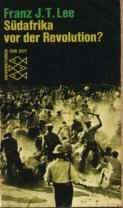
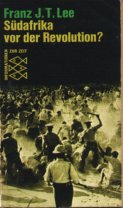
1) Parts of this letter are published in: Franz J. T. Lee, Südafrika vor der Revolution?, Fischer Taschenbuch Verlag, Frankfurt am Main, 1973, pp. 185-188. The complete text was originally printed in „Workers’ Voice“, Cape Town, November 1944, Volume 1, No. 2, pp. 18-20.
15) See: Franz J. T. Lee, „Raíces históricas y socio-económicas de la ideología del ‘racismo’: Sudáfrica y Guyana“, in: Guyana Hoy, edited by Rita Giacalone de Romero, Editores Corpoandes, Editorial Venezolana C. A., Mérida, Venezuela, 1982, pp. 13 - 83. Also see: No Sizwe, One Azania, One Nation, Zed Press, London, 1979.
20) Karl Marx, Das Kapital, Band I, Dietz Verlag, Ost-Berlin, S. 800-801. My free translation - FJTL.
******************************************************************************************************
home


 Venezuela's Adjunct Ambassador to the United Nations, Julio Escalona writes: The recognition of the Rights of Mother Earth is the way forward for humanity to break with a civilization founded on a right of an anthropocentric character set up on the basis of predominance of reason (converting nature into an object), private property, the State above society.




 Posts
Posts

