Thursday, 10 June 2010

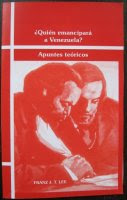
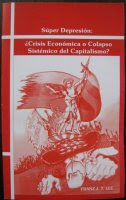
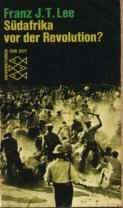
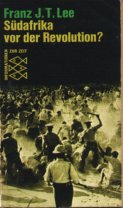
Our Pandemonium Historic Documents: The internationally 'Hushed Up' Revolutionary Marxist Leader of South Africa - The Other Side of the Apartheid Truth.

Our Pandemonium Historic Documents: The internationally 'Hushed Up' Revolutionary Marxist Leader of South Africa - The Other Side of the Apartheid Truth.

See: First German Edition: Franz J. T. Lee, Suedafrika vor der Revolution?, S. Fischer Verlag, Frankfurt am Main, 1973.
See Second German Edition: Franz J. T. Lee, Suedafrika am Vorabend der Revolution? ISP-Verlag, Frankfurt am Main, 1976. 
English translation by Wilfried F. Feuser, see: 

Isaac Bangani Tabata
(1909-90)

Isaac Bangani Tabata, political activist and author, was born near Queenstown in the Cape and educated at Lovedale and Fort Hare. In 1931 he left university and moved to Cape Town, where he worked as a truck driver, joined the Lorry Drivers' Union and became a member of its executive. He also joined the Cape African Voters' Association. In 1933 he began attending meetings of the Trotskyist-oriented Lenin Club and subsequently helped found the Workers' Party of South Africa, an offshoot of the Lenin Club. In the early 1940s he was one of a group of radicals who took over the leadership of the All African Convention (AAC), arguing for a boycott of all racial structures proposed by the government, and he helped to found the Non-European Unity Movement. As an organiser for the AAC he made yearly trips to the Transkei in the late 1940s and early 1950s. He was banned in 1956. In 1961 he established and became president of the African People's Democratic Union of Southern Africa. Tabata was married to Jane Gool, also a political activist. They left South Africa in 1963 and lived in Tanzania, Zambia and Zimbabwe. Tabata's writings include The Rehabilitation Scheme: 'A New Fraud' (1946), The All-African Convention: the Awakening of a People (1950), Boycott as a Weapon of Struggle (1952), and Education for Barbarism.
Source: Allison Drew, ed., South Africa's Radical Tradition: A Documentary History, vol. 1, Cape Town: University of Cape Town, Buchu and Mayibuye, 1996.
 
Allison Drew's home page

Tuesday, 8 June 2010

China Digital TV Wins Satellite TV Contract in Venezuela

China Digital TV Wins Satellite TV Contract in Venezuela
Fri May 28, 6:00 AM

BEIJING, May 28 /PRNewswire-Asia/ -- China Digital TV Holding Co., Ltd. (NYSE: STV) ("China Digital TV"), the leading provider of conditional access systems to China's expanding digital television market, today announced that it has entered into a contract with CANTV, the leading integrated telecommunication service provider in Venezuela, to install various systems and solutions on CANTV's direct-to-home (DTH) satellite platform.

CANTV is the largest integrated telecom operator in Venezuela and has been developing its IPTV services since 2009, expecting to deliver IPTV beta tests in 2010.

China Digital TV has been engaged to install a conditional access (CA) system, a subscriber management system (SMS), and electronic program guides (EPGs) on CANTV's DTH satellite platform to enhance the operator's IPTV network. The DTH platform is expected to begin beta testing in the third quarter of 2010 and be fully operational in early 2011. It is expected to cover the entire territory of Venezuela, servicing more than 600,000 paying subscribers by 2015.

Tracy Yue, general manager of China Digital TV's overseas business, commented, "We are delighted to win our first contract in Latin America, which shows the solid progress we are making in overseas market expansion. This encouraging achievement also demonstrates the strong demand for China Digital TV's products and services in emerging markets. We will continuously optimize our solutions during the implementation process according to the needs of CANTV, and assist CANTV to enhance its competitiveness in Venezuela's emerging pay-TV market."

Alfredo Munoz, manager of multimedia operations at CANTV commented, "We are excited to partner with China Digital TV, whose solutions have demonstrated great success in China, the world's largest TV market by viewership. China Digital TV's excellent security technology, anti-piracy solutions, and high-quality service enjoy a high reputation among industry players in the China market. We are very confident in our partner's ability to provide the advanced technologies and solutions necessary for the success of our groundbreaking DTH project."

Safe Harbor Statements

This announcement contains forward-looking statements within the meaning of Section 27A of the Securities Act of 1933, as amended, and Section 21E of the Securities Exchange Act of 1934, as amended. Such forward-looking statements are made under the "safe harbor" provisions of the U.S. Private Securities Litigation Reform Act of 1995.

These forward-looking statements can be identified by terminology such as "will," "expects," "anticipates," "future," "intends," "plans," "believes," "estimates," "may," "should" and similar expressions. Such forward-looking statements include, without limitation and comments by management in this announcement about trends in the CA systems, digital television, cable television and related industries in the PRC and China Digital TV's strategic and operational plans and future market positions. China Digital TV may also make forward-looking statements in its periodic reports to the U.S. Securities and Exchange Commission, in its annual report to shareholders, in press releases and other written materials and in oral statements made by its officers, directors or employees to third parties. Statements that are not historical facts, including statements about China Digital TV's beliefs and expectations, are forward-looking statements. Forward-looking statements involve inherent risks and uncertainties. A number of factors could cause actual results to differ materially from projections contained or implied in any forward-looking statement, including but not limited to the following: competition in the CA systems, digital television, cable television and related industries in the PRC and the impact of such competition on prices, our ability to implement our business strategies, changes in technology, the structure of the cable television industry or television viewer preferences, changes in PRC laws, regulations or policies with respect to the CA systems, digital television, cable television and related industries, including the extent of non-PRC companies' participation in such industries, and changes in political, economic, legal and social conditions in the PRC, including the government's policies with respect to economic growth, foreign exchange and foreign investment.

Further information regarding these and other risks and uncertainties is included in our annual report on Form 20-F and other documents filed with the U.S. Securities and Exchange Commission. China Digital TV does not assume any obligation to update any forward-looking statements, which apply only as of the date of this press release.

About China Digital TV

Founded in 2004, China Digital TV is the leading provider of CA systems to China's expanding digital television market. CA systems enable television network operators to manage the delivery of customized content and services to their subscribers. China Digital TV conducts substantially all of its business through its PRC subsidiary, Beijing Super TV Co., Ltd., and its affiliate, Beijing Novel-Super Digital TV Technology Co., Ltd., as well as subsidiaries of its affiliate.

ABOUT CANTV

CANTV (BVC: TDV-D) is the first telephone service enterprises in Venezuela, founded in 1930. The company was re-nationalized in 2007. As of December 2009, CANTV's customer base numbered 13.43 million mobile subscribers, 5.63 million fixed telephony subscribers and 1,264,000 broadband subscribers.
http://ca.news.finance.yahoo.com/s/28052010/31/link-f-prnewswire-china-digital-tv-wins-satellite-tv-contract-venezuela.html

Monday, 7 June 2010

TRANSHISTORIC, ANTICIPATORY DOCUMENTS: Franz J. T. Lee: From Revolutionary Africa ... Long live the Sword of Simn Bolivar!


Franz J. T. Lee: From Revolutionary Africa ... Long live the Sword of Simon Bolivar!
Originally
Published: Monday, July 24, 2006
University of Los Andes (ULA) professor Franz J. T. Lee writes: For the first time in my life, I heard about the existence of the Liberator Simon Bolivar, in 1961, in Cape Town, while we were founding and extending the first modern guerrilla movement across Southern Africa. At first it was called the "Yu Chi Chan Club" (YCCC) and later it became the "National Liberation Front of South Africa (NLFSA).
The very original name indicated that we were studying yu chi chan (guerrilla warfare), not only of Mao ze-Dong, Clausewitz, but also of Che Guevara.
To introduce me into the clandestine movement, that had the historic objective of toppling fascism, racism and Apartheid in Southern Africa by all means necessary, I was asked by my comrades to give a lecture on the French Revolution. At the age of 23, having been born and bred in a fascist police state that learned all its terrorism from Nazi Germany, and which was essentially anti-communist, I knew absolutely nothing about Marxism, colonialism and independence wars in Latin America.

  • If I remember well, I must have given the worst lecture that one could imagine.
However, of great political interest to me, was that I became acquainted with Francisco de Miranda, Simon Bolivar, Jose Marti, Fidel Castro and Che Guevara. Little did I know that 45 years later, I would find myself in the epicenter of the Bolivarian Revolution in Venezuela.
What immediately fascinated me about Simon Bolivar, whose works at least were not officially forbidden to read and study in Apartheid South Africa? In any case, till today, very few people speak Spanish in Southern Africa.
What really touched me was Bolivar's constant, consequent revolutionary spirit that swore across the ages never to come to rest until America would be free. Also, it fascinated me to see how precisely he had identified the historic "root of all evil, the "plague" of North America subjugating the conquered peoples.
At first my knowledge of the Bolivarian Revolution within the context of the French, Industrial and American Revolutions was still superficial, however, after having studying history, dialectics, class struggles and Marxism across the next decades, I realized that great gods, great ideas, great men and great races do not necessarily make "history."

  • However, I noticed that liberators like Patrice Lumumba, Walter Rodney, Fidel Castro , Malcolm X or Hugo Chavez Frias surely express in microcosm the deepest aspirations of their downtrodden peoples on the road towards total human emancipation.
At the same time, it became obvious that dictators like Hitler, Bush and Pinochet express the capitalist interests of global imperialism and corporatism, and that they would sacrifice humanity in their megalomaniac ruling class greed and egoism.
Hence, in the Third Millennium, from Revolutionary Africa, Happy Birthday, Simon Bolivar!
We are living at a most dangerous time, where the North American "plague" has in mind to extinguish the very human species with all the stockpiled mortal weapons of mass destruction, It is using its Zionist paw, its Apartheid pawn, Israel, to terrorize its own domestic Jewish and Arab peoples, and externally, to annihilate the whole Arab world, in the name of "the right of self-defense" (Bush). In reality it concerns theft of oil resources.

Very few world leaders, among them, Fidel and Chavez, officially have protested against the current Israeli holocaust of thousands of innocent men, women and children, razing Lebanon to the very ground, and which already is aimed at the violent destruction of Syria and Iran.
This is what Bush meant by a matter "not of months, but weeks."
Jesus Christ and Simon Bolivar taught us the revolutionary essence of real, true, earthly liberation, how to get rid of plagues like the USA and Israel: I did not come to this world to bring peace! I am bringing the sword of Bolivar. Also, I am bringing fire from Chavez' Russian rifles, how I wish that it is already sparking off the North American prairie.
As birthday message across a religious America, across a corporate globe in agony, the emancipatory essence of liberation, of Simon Bolivar's heritage, of Bolivarian revolutionaries, against corruption is simply:

"Knoweth ye the truth, and the truth shall make thee free!"
Franz J. T. Lee

Sunday, 6 June 2010

Global Relevance of the Social Philosophy of Mahatma K. Gandhi - By Franz J. T. Lee

Global Relevance of the Social Philosophy of Mahatma K. Gandhi


The historic life and heroic struggle of Mahatma K. Gandhi (Oct 2, 1869 to Jan 30, 1948) against British colonial injustice, human degradation, economic exploitation and social discrimination are well known, here we will just spotlight certain selected aspects of his social philosophy, its moral principles and its contemporary relevance for global revolutionary and emancipatory efforts. Not by any means are we ignoring the worldwide invaluable works and moral contributions of the global, erudite, academic titans on the topic Gandhi, that definitely concern his social principles and ascetic modus vivendi, however, here, we will just quote K. Santhanam, who is also an expert in this matter, and who best describes our own philosophic deliberations:
"... he (Gandhi) lived an austere life, practiced strict vegetarianism and abstained from alcoholic drinks, tobacco and even the milder stimulants like coffee and tea. His attachment to simple natural remedies against illness and disease and his radical ideas on education are not so well known to the outside world and, even in India, they have not made much impact. Gandhi deliberately refrained from making these issues public and thereby confusing the people. The only exception was prohibition of intoxicating drinks which became a tool in the armory of satyagraha."
See: K. Santhanam, "Basic Principles Of Gandhism":
http://www.mkgandhi.org/gandhi-his%20relevance/cha p26.htm
Now, what are the fundamental political principles of Gandhism? Why should they concern Latin America and Venezuela? What relevance do they have for social conflicts, for an attempted military coup d'etat, for oil sabotage, for electoral campaigns, for Citizen Power?
Gandhism, existing on the other extreme of Marxism, surely should concern us, as Ernst Bloch would say, as the warm human current of emancipation, of  revolutionary processes that are "neither Marxist nor Anti-Marxist", that are against brutal violence, imperialist "terrorism"  and that categorically favor real world peace and true social justice.
Here in Venezuela, where morality is even elevated to a constitutional State power, surely Gandhi's social philosophical views have become topical again.
In fact, in his many addresses to the nation, very often, underlining nonviolence, social justice and human happiness, President Hugo Chávez Frías ocassionally refers to Mahatma Gandhi and Martin Luther King Jr. However, it can not be in our emancipatory interest eternally just to glorify any social reformer or revolutionary. On the contrary, as time passes by, in fairness to Gandhi himself, our scientific and philosophic duty is to enrich his life work, to criticize and "up-date" it constructively.
Firstly, as we know, Gandhi developed the famous social technique of "satyagraha" -- peaceful social action, a social philosophic system that enjoins nonviolent personal behavior and social responsibility.
However, in essence, it is not totally passive or pacifist, in cases of liberatory self-defense, it "holds fast to truth", defends it with "resistance", for example, like it was the case in the struggle against Apartheid in South Africa, in which Gandhi, the "Indian Congress of South Africa" and the African National Congress (ANC)  had participated. In more detail, below we will deal with these basic principles of his philosophy.
(See: http://www.stanford.edu/~piber/nonviolence/glossar y.html)
Secondly, well-known is his life long struggle in India and in South Africa, against "untouchability", that is, against the ideological, discriminatory, psychological, caste and colonial notions of "race" superiority and inferiority. In this case, like many of us, Gandhi found himself between the devil and the deep, blue sea, between colonial racist ideology and ancient cultural traditions. He had to defend Indian cultural and moral values, to grasp the millions of pariahs on their level of social imagination, but at the same time with new, independent values, effectively he had to confront British colonial immorality and racism.
In the current revolutionary process of Latin American integration, of finding our own historical roots, of applying our own Bolivarian moral values, with the truth trying to ward off malicious, disinformation campaigns and US war-mongering, we find ourselves in a similar situation. Surely, Gandhi could give us a historic lesson, not to copy it, but to enrich, to materialize it.
Now, very briefly, let us critically highlight some of the basic elements of his social philosophy.
1. DIALECTICAL UNITY AND CONTRADICTION BETWEEN HUMAN ACTION AND SOCIAL THOUGHT
In typical, oriental tradition, using his specific idealist, religious terminology, concerning individual human beings, formal logically neglecting their social, class nature, their master and slave relations, nonetheless, he taught about the indivisible integrity, about the dialectical unity and contradiction of the human corporeal body and divine mind. According to Santhanam, confirming his dialectical philosophy:
"He (Gandhi) was never tired of saying that the body should be controlled by the mind and the mind by the soul."
(Santhanam, ibid.)
Of course, across the past century, the concept "control" has acquired very negative, modern connotations, especially in the realm of the "war of ideas", of "mind and thought control", that is, in general, in the realm of political domination, manipulation and indoctrination; hence, to understand Gandhi in an emancipatory sense, a better term would be "related" in a human, humane and humanist sense of harmony. In this way, by enriching Gandhi, together with him, we could surpass the blatant, mundane lies of reactionary ideology, and thus head towards the revolutionary theoretical cliffs of truth, of emancipatory Pico Bolivar.
In his own words, for us  Santhanam expresses this as follows:
"But this control is not to be achieved by despising or neglecting either the body or the mind or in the mystic exaltation of the soul by itself. He attached to physical health and well-being as much importance as to plain and logical thinking or moral responsibility."
(Santhanam, ibid.)
Leaving the generally emphasized Gandhist "spiritualization of politics" for a while aside, rather we should note that Gandhi , in his idealist dialectics, had underlined that, on the one hand, real thought ... we would say true, praxical theory ... organically must be related to highly moral endeavors, and on the other hand, to socially useful, right, righteous action ... we would say, to real, theoretical praxis.
However, in the last analysis, delving much deeper into his social philosophy, diving further into his favorite daily prayers, that is, in the verses of the Bhagavad Gita, it becomes obvious that Gandhi had no faith in purely abstract, virtuous spirituality by itself. He regarded it just as a kind of aureole or illumination which should accompany any liberating social thought and action.
2. A SIMPLE SET OF MORAL HUMAN VALUES
In a corrupt society of British colonial egoism, avarice and immorality, for India to gain social independence, Gandhi saw the liberating necessity of introducing ethical and moral social action and thought in the independence movement.
Precisely this was also the revolutionary motive of the Bolivarians why constitutionally a Moral Power had to be introduced in Venezuela, to erase forever the ossified, racist and alienating vices of centuries of oligarchism and "puntofijismo".
Concerning the selection of the kind of moral values we could differ, but he considered the following to be of paramount importance:
"the main elements are selflessness, non-attachment, non-violence and active service." (ibid.)
Whether the human species, whether all or some human beings, or whether certain social classes are by "nature", by essence or spirit non-violent, pacifist or unselfish, we leave this to the thousands of erudite scholars to determine. However, what we have noticed across the last centuries is that the ruling social orders in which we are living, all have been violent, were killing millions of earth-dwellers by social order itself. We are being born in violence, live in violence, die in violence; even more so today, at the eve of global fascism.
But, in the words of Santhanam, let Gandhi explain to us the moral of this bloody, historical story:
" ... he believed that the growth of a man's personality is proportionate to his faith in and practice of these virtues. This is possible only when he identifies himself more and more with an ever-increasing circle till it embraces all humanity and even all living beings. He judged the value and vitality of social institutions by their capacity to foster such growth." (ibid.)
Surely, very soberly we can say that at the current level of the global production process, of permanent natural destruction and boundless social alienation, in a violent, capitalist, imperialist, corporate, fascist environment in agony, this human endeavor, as sublime as it may be, is impossible to attain anymore.
Gandhi, we ourselves, did not choose our serpentine road towards emancipation. Bush, his local opposition Quislings, his international CIA lackeys and the Pentagon-White House war-mongers with their "Project for a New American Century" and "Colombia Plan", paved the violent road of humanity with their belligerent, depleted uranium "mother of all bombs".
3, CONCERNING THE POLITICAL STATE
Precisely with reference to the above, concerning the colonial, political State, Gandhi suggested the following alternative. For him, what enjoys primary significance is only "the growth of individuals".  The State should only serve the interests of the individuals that make up society.
Here, in total contradiction with Socialism or Marxism, a politico-economic analysis of colonial and neocolonial realities is totally absent; no mention about any class interests or class struggles. In fact, on the contrary, in his earlier years, because of its social and sexual discipline, rather of its sexual repression, Gandhi defended this very oppressive caste-system in India. This ideal notion was not completely abandoned in his more mature writings.
Nonetheless, contrary to Maquiavelli, whose views he repudiated, Gandhi considered means just as important as ends, even more relevant than ends, never mind, even if they were socially desirable and "good".  Social ends direct, but human means constitute life itself.
According to him, in real political life, in the struggle for independence, human means have to be righteous, good, truthful and non-violent.
Of course, in a classless society, in the absence of competition, monopolization, centralization, globalization, accumulation of capital and profits, any sane person or individual would be inhuman not to agree with these Gandhist humane ends, however, in the true reality in which we currently live and die, for example in Iraq, more precisely in Fallujah, the sole application of this practice against our bloodthirsty arch-enemies would not only result in mass suicide,  globally, it would be genocidal for billions of working, toiling pariahs. In fact, Gandhi, and his disciple, Martin Luther King Jr.,  themselves had to take this bloody, Socratic hemlock. Definitely, neither raw violence nor myopic pacifism can emancipate us.
4. FAITH AND HOPE IN A GOD
This is the rock of ages on which Gandhi's social philosophy stands and falls. However, not only the world of Gandhi, but of over 90% of the global population, no matter whether they are actively, passively or culturally believers in a myriad of different divinities. Here, we refrain to comment about religious critique or critical religion in the 21st century, in the "Information Age". Let us allow Santhanam to summarize Gandhi's views on the matter.
"Faith in God is, according to Gandhi, the foundation of all moral values. He never defined God and was prepared to allow every person to have his own idea of God. For himself, he was inclined to think of Him as the Upanishadic Brahman. But, so long as a person believes in some source of spiritual life and holds it superior to the material universe, he is a believer in God."
CONCLUSION
Finally, in honor of Gandhi, we have to state that morality, that ethical behavior and thought, stand higher than any religious fantasies, chimeras or phantasmagorias. He himself preferred any true agnostic with high moral values to a corrupt, megalomaniac pharisee or to a State president, who in messianic bellicose array daily blesses Mammon or the nation.
Inter alia, across the twentieth century, the views of Gandhi on politics, economics and society played an important role in the independence movements against British colonialism in India and also in South Africa, where indentured Indian cheap labor was exploited to the maximum. In India itself, much later, to a certain extent they were even implemented in the various Five Year Plans, and in the program of Khadi and Village Industries. Also, the social philosophic views of Gandhi had influenced liberatory movements across the globe, in this way, Gandhi has left his own emancipatory imprint on the destiny of humanity.
******
Originally published: 

http://narcosphere.narconews.com/notebook/franz-jt-lee/2005/01/global-relevance-social-philosophy-mahatma-k-gandhi

Home

Saturday, 5 June 2010

UNASUR: An Emerging Geopolitical Force


UNASUR: An Emerging Geopolitical Force
 
By Alex Main - CEPR, June 4th 2010

Earlier this month, as the US loudly complained about Venezuela’s decision to purchase arms from Russia, South America’s ministers of defense came together in Guayaquil, Ecuador and put the finishing touches on an agreement to develop common mechanisms of transparency in defense policy and spending. The agreement, which also calls for the creation of a multilateral Center for Strategic Defense Studies, is the most recent example of the growing effectiveness of the Union of South American Nations (Spanish acronym UNASUR) as a forum for addressing the most urgent and sensitive issues on the regional agenda. Though the group remains unknown to most of the US public - and is rarely referred to by US policy makers - it has, in the space of a few years, emerged as one of the Western Hemisphere’s leading multilateral bodies and, in the process, is rapidly undermining the regional clout of the Washington-based Organization of American States (OAS).

UNASUR first began to take form in 2004 when South American leaders signed the Cusco Declaration that committed their governments to creating “a politically, socially, economically, environmentally and infrastructurally integrated South American area.” Despite the diverging political agendas of the region’s governments, the leaders agreed on prioritizing the group’s role as a geopolitical actor or, in the words of the declaration, pursuing “concerted and coordinated political and diplomatic efforts that will strengthen the region as a differentiated and dynamic factor in its foreign relations.”

In May 2008 UNASUR was officially established with the signing of a constitutive treaty in Brasilia. In September of the same year the group achieved its first diplomatic milestone when it successfully defused South America’s most serious political crisis of the last five years: the attempted violent destabilization of Evo Morales’ government in Bolivia. President Michele Bachelet of Chile, the pro-tempore president of UNASUR, convened an emergency meeting of South American heads of state in Santiago that quickly issued a unanimous statement strongly condemning the attacks against Bolivian democracy and announcing the creation of a commission of “support and assistance” to the Bolivian government. Soon afterwards, Bolivia’s opposition groups abandoned their violent tactics and agreed to enter negotiations with the Morales government.

Though the US administration has been actively promoting the OAS as a defender of democratic stability in the hemisphere, that organization played no role at all in the peaceful resolution of the 2008 Bolivian crisis, due no doubt in part to the US’ ambivalent position towards the opposition’s destabilization campaign. In the nearly two years that have elapsed since UNASUR’s successful diplomatic intervention in Bolivia, the group has continued to demonstrate its ability to take on the region’s thorniest issues, independently of the OAS and Washington.

In August of 2009, a special UNASUR summit was held in Argentina to discuss a highly controversial agreement that expanded the US’ military presence in Colombia and was perceived as threatening to Colombia’s neighbors, particularly Ecuador and Venezuela. Though tensions have continued to flare over the agreement, the summit paved the way for dialogue and gave further impetus to UNASUR’s Defense Council in which Latin American defense ministries engage in open discussions on national and regional defense projects. The Council’s latest achievement was the Guayaquil agreement mentioned above.

UNASUR also adopted a position of staunch opposition to the coup in Honduras, refusing for instance, to recognize the elections held last year under the de facto government. While Peru and Colombia – the two UNASUR governments most closely aligned to the US – eventually joined Washington in recognizing the elections, the rest of the 12-member bloc still refuses to recognize the legitimacy of the new Honduran government despite the US administration’s best efforts to change their minds. Even Chile’s new right-wing president, Sebastian Piñera, has reportedly backed UNASUR’s official position on Honduras. As a result of this collective resolve, Spain was forced to backtrack on its decision to invite the Honduran government to participate in a Latin America-European Union summit held in Madrid on the 17th and 18th of May.

On May 4th, UNASUR sent another clear signal of its intention to continue charting an independent course with the unanimous election of former Argentinean president Nestor Kirchner to the post of Secretary General of the organization. During his presidency, Kirchner opposed the US-sponsored “free trade” agenda in Latin America, rejected the Washington Consensus and International monetary Fund-led economic policies, and successfully steered his country out of the worst economic recession in its history. President Lula da Silva of Brazil welcomed Kirchner’s designation as Secretary General and said that it would lead to a further “stage of transformation” for the regional bloc.
Source: Center for Economic and Policy Research

Creative Commons license icon
http://venezuelanalysis.com/analysis/5410


Patrick J. O'Donoghue: Venezuela needs to explain brief of new Center for Situational Study (Cesna)


Published: Friday, June 04, 2010Bylined to: Patrick J. O'Donoghue
Venezuela needs to explain brief of new Center for Situational Study (Cesna)
VHeadline News Editor Patrick J. O'Donoghue reports: ABC digital and Radio Netherlands report that the Venezuelan government has created a situational center specifically to "collect, compile, collate and analyze information of national interest which could be declared classified."

The new body is called the Center for Situational Studies of the Nation (Cesna) and will be affiliated to the Interior & Justice (MIJ) Ministry.

The setting up of Cesna was announced in the Gaceta Oficial on Wednesday but there has been no mention of it in pro-government media.

It is presumed that Cesna will interact with the National Intelligence Service (Sebin), formerly the dreaded DISIP. Most ministries and public services have a media department or press team, which collects news cuttings related to their own office. Miraflores Palace has a similar department that collects and collates media cuttings which are passed on the President for his briefings.

The new organ is believed to have been created to beef up state and national security. A more sinister element comes to light and requires explanation in the following sentence that: Cesna "could declare of reserved, classified character or for limited release any information, event or circumstance, which it becomes aware of in the exercise of its duties."

President Chavez is expected to elaborate on the precise functions of the new intelligence organ during his Sunday radio address and release the name of the person or persons who will run Cesna.

According to the Dutch report, Control Ciudadano NGO director, Rocio San Miguel is leading opposition to the decree, alleging that it will limit access to public information and is a direct attack on freedom of expression. She slams presidential decree No.7.454 creating Cesna as unconstitutional.


Thursday, 3 June 2010

Venezuelan government pursues rotting food wastage as more cases emerge

General News
| More
Published: Thursday, June 03, 2010
Bylined to: Patrick J. O'Donoghue
Venezuelan government pursues rotting food wastage as more cases emerge
VHeadline News Editor Patrick J. O'Donoghue reports:  The case of the rotting and decomposed food found in containers at Puerto Cabello customs yard continues to hold public attention, especially among government supporters.
Interior & Justice (MIJ) Minister Tarek El Aissami has stated that more arrests are possible as the investigation into the huge waste takes shape. The former president of the State PDVAL food distribution service will be formally charged today for his part in the mess.
The government, El Aissami said, will establish responsibilities and apply penalties in a transparent fashion. "The public must know the results of the battle in public and private administration ... we have an implacable battle against internal corruption, inefficiency and bureaucracy."
The National Assembly (AN) has reacted to the scandal. AN foreign policy committee deputy, Saul Ortega has supported the investigation and criticized the opposition for latching on to the scandal when the government was already on the case.
Speculation and hoarding of food products by the bourgeoisie sector is immoral, he insisted. Ortega expounded that social programs aim to obtain special prices for food that arrives in the country to benefit less well off sectors and such examples of waste must be severely penalized.
What he would like to see, Ortega exclaimed, is responsibilities established throughout the whole chain, including the person in charge of the storage center ... "there are special conditions to comply with in each kind of food and an entry and exit protocol to follow ... the latter was not followed."
Former Central Bank of Venezuela director, Domingo Maza Zavala has joined the chorus of protest, saying the waste is a great loss for Petroleos de Venezuela (PDVSA) . However, the essence of the scandal lies not in negligence, he stated, but in the crime committed against the population.
PDVSA has become a center of controversy, he continued, because its physical product has been contracting. While oil prices have been increasing worldwide, export volumes have not with the result that less oil revenue is coming in.
Maza Zavala brushed aside government forecasts of an economic take-off this year, declaring that there are no indications of a real recovery of economic activity. Retail sales have dropped, he said, which could be interpreted as a serious recession. The only latent positive sign is an increase in public spending, which is understandable, given the approximation of elections.
A report in El National cites a claim from inhabitants of Los Guayos (Carabobo) of 400 containers with powdered milk and cooking oil stored for the past two years in a warehouse belonging to the Transgar company.
Another complaint centered on containers at Montesano sheds in Puerto Cabello (Carabobo) allegedly containing rotting milk.
Patrick J. O'Donoghue
news.editor@vheadline.com
http://www.vheadline.com/readnews.asp?id=92755